Archive for the ‘Prosper’ Category

Prosper.com operating costs

Friday, June 13th, 2008

The Prosper study I featured yesterday lists the Prosper fees. While it does not attempt to calculate the revenues of Prosper.com it gives some indications regarding the operating costs:

According to Mendelson (2006), the primary costs of Prosper consist of …, (2) a $4 fee for identity authentication, credit pulling, and bank-account setup per active borrower, (3) customer service at the average rate of four interactions per loan and $2 per interaction, and (4) a fixed overhead cost of approximately $3 million per year. …

Given these estimates, it is difficult to measure Prosper accounting in precision. However, there is no doubt that Prosper’s revenue does not cover its full cost (as of February 2008). The difference is met by a large stock of venture capital.

Regarding the Prosper revenues, Mike did a calculation estimating the November 2007 revenues at 114,000 US$. If this is correct, it did not even cover fixed overhead.

Prosper changed fees since that last calculation.

New academic study estimates average Prosper ROI at 6%

Thursday, June 12th, 2008

The new study "Dynamic Learning and Selection: The Early Years of Prosper.com" by Seth Freedman and Ginger Zhe Jin, both at the Department of Economics, University of Maryland analyses Prosper data in a time frame from April 19th 2006 to December 31st 2007.

The study analyses the development of the Prosper.com marketplace and how lenders refined their strategies as a result to own experiences and changed settings.

They write:

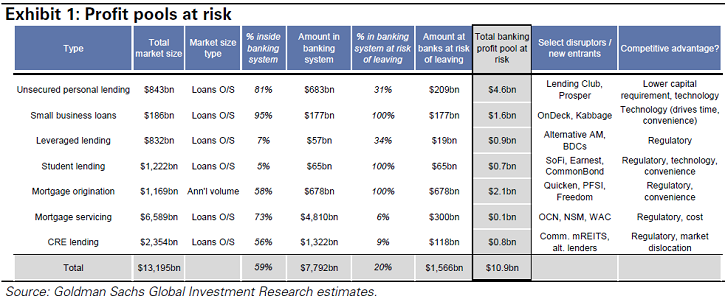
Overall, we conclude that Prosper is evolving from a comprehensive market to a market that primarily serves the borrowers who have access to traditional credit. This implies that Prosper will compete head-to-head with the traditional banks rather than pick up a missing market. Assuming away any cost in information processing, we estimate that the average rate of return of a Prosper loan is 6% if Prosper loans continue to perform according to what we have predicted from their existing performance. From the lenders point of view, this number compares favorably to 6-month certificate of deposit and 3-year Treasury bill, but less favorably to the rate of return implied by the S&P 500 in the same time period.

Other findings are that high interest loans yield lower returns due to high default rates and that the probability for defaults of Prosper loans peak at month 10 and the edge down.

The main uses of Prosper loans are:

33% of all previous Prosper listings have mentioned credit card consolidation, which is higher than the mention of business (23%), mortgage (15%), education (22%), and family purposes (20%) such as weddings.  

Cited from the conclusion chapter of the study:

The first two years of Prosper has enlivened the concept of P2P lending, but the road towards success is full of challenge. While it is tempting to expect P2P lending to alleviate credit rationing for near- or sub-prime risks, we find Prosper evolving from a comprehensive market toward a market that primarily serves borrowers who have access to traditional credit. This implies that Prosper will compete head-to-head with the traditional banks, rather than pick up a missing market. This pattern is not unique to Prosper. …

How can Prosper compete with traditional banks? Our study suggests that the microfinance approach, as implemented through Prosper groups, has failed to select good risks or enhance loan performance. But on the up side, lenders are learning fast about the pitfalls of P2P lending thanks to the transparency of Prosper. Our calculation suggests that, if the loans continue to perform as what we have predicted from the market performance, Prosper loans could yield an average return of 6%.

See related post on the Prosper blog.

Bankrate.com: Peer-to-peer online lending grows in tight economy

Sunday, June 8th, 2008

A recent Bankrate.com article gives an update on the development of p2p lending in the US.

Chris Larsen of Prosper.com sees the current financial situation as a chance for p2p lenders:

Home equity used to be the cash management tool for the credit-worthy borrower, and that has really, really dried up. In many ways, Prosper's three-year, 25,000 US$ loan is a pretty good proxy for what people were using home equity for — improving their home, starting a sole proprietorship, college costs and certainly for replacing credit card debt.

Javelin Strategy & Research is quoted that credit card debt is the main reason people want to use p2p lending:

We're forecasting that P2P lending specifically for credit card balances will grow from 38 billion US$ in 2007 to 159 billion US$ by 2012

The final advice of the article is:

Prospective borrowers and lenders would do well to thoroughly research P2P companies before jumping at the chance for a lower rate on a loan or a higher return on an investment. …

Prosper decides to hold on to 4+ months late loans

Saturday, May 31st, 2008

Prosper.com announced yesterday that the offers received for late loans to be sold off as defaults were to low to be acceotable. Doug Fuller, Vice President of Operations says, that with offers at 1.5 cents for the dollar, Prosper believes "the prudent course of business is NOT to sell them at this time". More on the Prosper blog post.

Prosper to run television ads

Monday, May 5th, 2008

Prosper will run television ads (preview them online). The TV spots will be aired in test markets starting this week.

Prosper Days 2008 videos available

Friday, April 18th, 2008

Prosper.com made the videos of the Prosper Days 2008 available. Thanks Prosper!

I will just feature one session here. In "Managing large portfolios" Adam Weyeneth, President of Fair Deal Credit talks about the issues for institutional lenders that want to invest into the asset class of p2p loans.

Link to this video and the related videos of the other sessions.

Big news - Prosper goes national with 36 percent max interest rate

Tuesday, April 15th, 2008

Announced today Prosper.com has achieved nationwide lending (exceptions South Dakota and Texas) with an interest rate maximum of 36 percent. Previously maximum interest rates varied on a state by state basis depending by the licenses Prosper had acquired.

Prosper chose the same construct to go national as did Lendingclub in December - both partnered with WebBank, Utah.

All loans originated through the Prosper marketplace are made by WebBank, a Utah-chartered Industrial Bank. Prosper provides services to WebBank in connection with the origination of such loans and Prosper services loans made to Prosper borrowers on behalf of registered Prosper lenders who purchase such loans.

This step has good potential to multiply the monthly loan volume originated by Prosper, as chances for obtaining a loan were in the past harmed in some states by low state interest rate caps (especially for lower credit grades).

Prosper seeks Hedge Funds as lenders

Thursday, March 27th, 2008

Prosper.com is actively promoting it's marketplace to hedge funds.

Prosper is America’s largest peer-to-peer marketplace with over 600,000 members,” stated Kirk Inglis, CFO of Prosper. “As credit markets experience unprecedented changes, institutional lenders, including hedge funds, are using Prosper to diversify portfolio returns without the lack of transparency and fees associated with structured consumer debt products.

(via ProsperousLand)

Another recent Prosper related topic was the concern raised by lenders that in select states Prosper stops any collection activities on small loans, if the borrower sends a Cease-and-Desist letter (the example given is a 2,500 US$ loan in Texas). The author of the blog post argues that the risks for lenders rise, if this example really shows overall practise.

Moreover, they won't pursue legal action to recover small loans. So all small loans are now risky since the borrower has an easy method to halt payment, collections and legal proceedings. Prosper simply seems unwilling to go after small borrowers.

Finally, even for larger loans, it seems unsafe to lend, since Prosper will only sue in select states. I don't recall Prosper saying anything about selective enforcement in my many lender agreements, but before I put another penny into Prosper, you can be damn sure I will ask them what states they will take legal action in and what the minimum loan amount is for which they will sue.


CBS evening news p2p lending video

Saturday, March 22nd, 2008

CBS recently featured Prosper and Lendingclub under the headline "Beating the financial giants at their own game".

Reports on Prosper Days 2008

Wednesday, February 27th, 2008

Prosper Days 2008 took place Monday and Tuesday. Judging from the impressions of attending lenders, who blogged about it, it was a well organised event, but for seasoned lenders there were few news announced. No news about the long awaited secondary market. One blogger sees the Bidding via API function as highlight. Further news is that Prosper will start suing borrowers who defaulted on their loans. This could improve results in the collection process, where effiency is low. Explanations of Prosper about which changes were tested in the collection process were appreciated
A good improvement will be Prosper's plan to change payment dates. So far the date a payment is due has been dependent on the initiation date of the loan. Soon payment dates will be matched with borrowers pay day. I am sure this will reduce lates, but I do wonder why such an obvious and easy change was not implemented much earlier. Some of the international sites from inception took into consideration at which time of the month the borrowers are likely to be liquid when setting payment dates.

I hope Prosper will publish videos of the session on their website, like they did with the Prosper Days 2007.